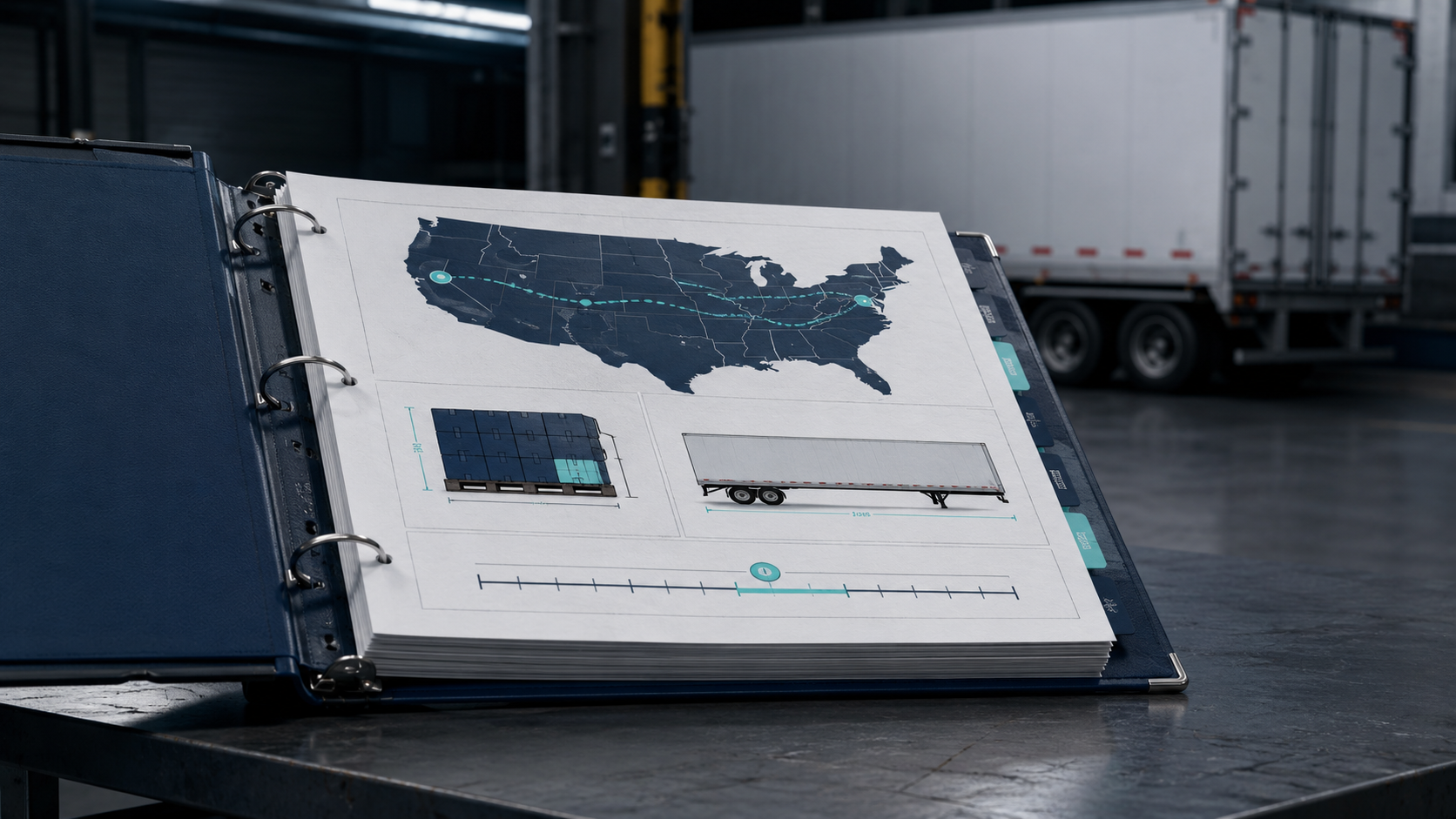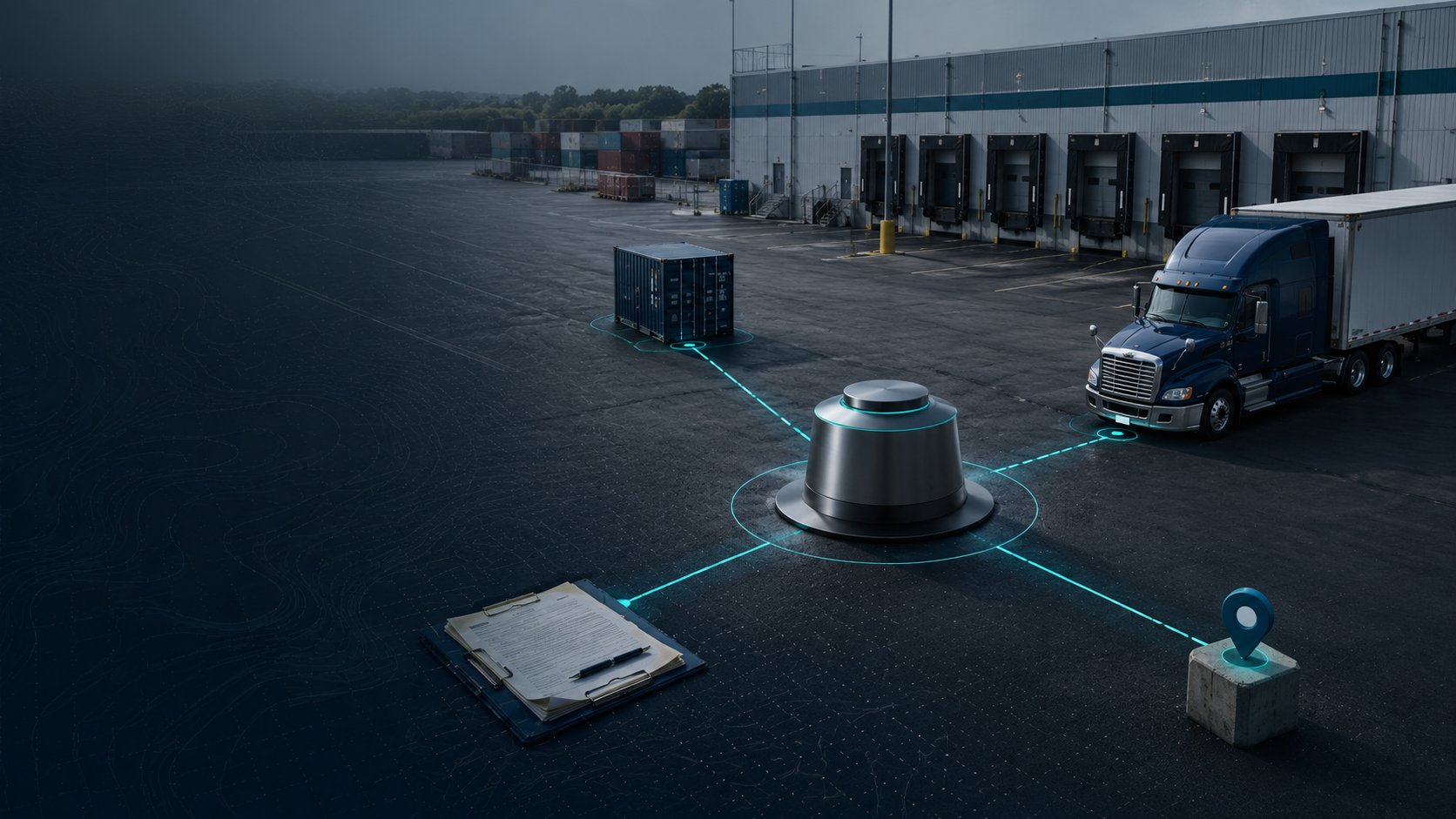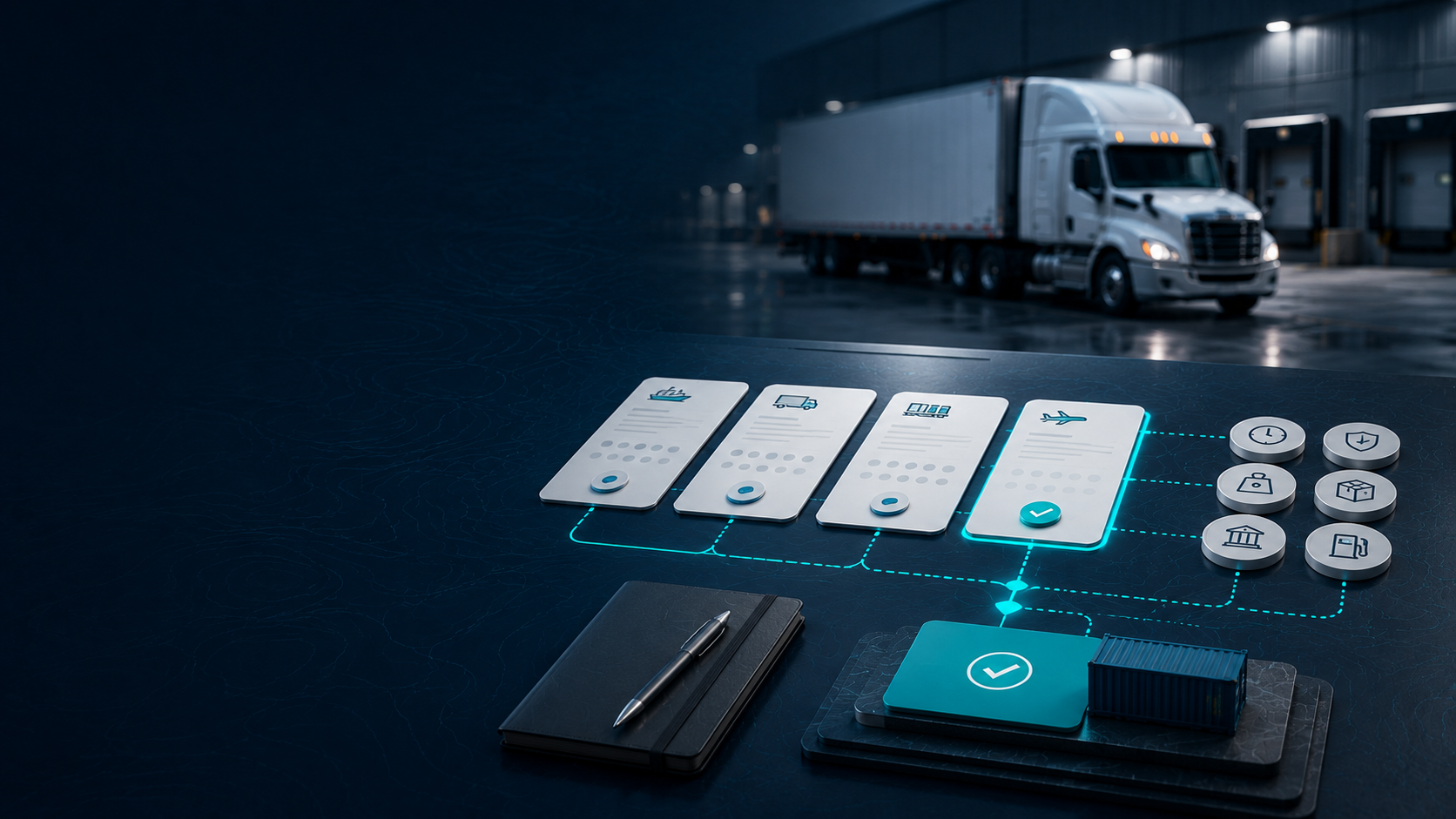
AI freight management is the use of artificial intelligence, automation, and data-driven workflows to help shippers manage transportation more effectively. It can support planning, procurement, quoting, execution, real-time tracking, documents, exception management, analytics, and performance review.
For many shippers, the need is simple: freight has become too complex to manage through inboxes and spreadsheets alone. LTL and FTL shipments may be moving across different providers. Carrier rates change. Documents arrive in different formats. Shipment delays require quick communication. Finance needs cleaner cost visibility. Leadership wants better supply chain visibility.
AI freight management should help bring that work into a more connected operating layer.
What AI Freight Management Includes
AI freight management can include several connected workflows:
Freight planning and demand forecasting
Quote comparison and freight rate analysis
Carrier and logistics providers evaluation
Booking and execution support
Real-time visibility and real-time tracking
Document management and manual data entry reduction
Exception management for shipment delays
Analytics for cost, service, and performance
Sustainability inputs such as fuel consumption or emissions awareness
The purpose is not to automate every decision. Freight still depends on judgment, relationships, constraints, and timely execution. AI systems are most useful when they help logistics teams see what is happening, understand what matters, and act faster.
Planning And Procurement
Freight planning often starts before a shipment is ready to move. Shippers may need to understand upcoming demand, lane patterns, facility needs, inventory management constraints, and provider capacity.
Predictive analytics and machine learning can support this work by identifying patterns in shipment data. For example, a platform might show where seasonal volume changes tend to affect carrier rates, where certain lanes have longer transit times, or where accessorial exposure is increasing.
This can help procurement and operations teams make smarter freight decisions without relying only on memory or scattered spreadsheets.
Quoting And Carrier Comparison
In AI freight management, quoting should be more than collecting prices. A useful platform should help shippers compare service, cost, provider fit, mode, and historical performance.
For LTL and FTL freight, that may include looking at carrier rates, shipment characteristics, lane history, delivery requirements, and service tradeoffs. The platform should make the decision easier to understand, not hide it behind a vague AI recommendation.
This is especially important for small and growing shippers. They may not have a large logistics department, but they still need clarity when choosing between price, speed, reliability, and support.
Execution And Visibility
Execution is where freight management becomes real. A shipment has to be booked, tracked, documented, and delivered. When something changes, the team needs to know quickly.
Real-time visibility helps shippers monitor shipment status and identify issues before they become customer problems. Real-time tracking should be connected to documents, notes, and communication history so the team does not have to reconstruct the story manually.
This is where a connected platform can improve logistics operations. Instead of checking multiple portals and inboxes, the team can work from one shared view of the shipment.
Documents And Operational Accuracy
Freight documents create a large amount of manual work. Bills of lading, proof of delivery, shipment notes, insurance details, invoice information, and claims documentation all need to be connected to the right load.
Generative AI can support document workflows when it is used carefully. A system may summarize shipment notes, help extract details from a document, or assist with categorizing communication. The freight team still needs review and control, but the repetitive work can be reduced.
Reducing manual data entry can improve speed and accuracy, especially when shipment volume grows.
Exception Management
Freight exceptions are inevitable. Weather, appointment changes, port congestion, facility issues, capacity changes, customs clearance requirements, and provider communication gaps can all affect the move.
AI can help by organizing exception signals and prioritizing work. If a shipment is at risk, the platform should help the user see the issue, understand the context, and coordinate the next step.
A strong exception workflow should connect shipment data, documents, provider communication, and escalation history. The goal is a faster, more confident response.
What To Watch In AI Freight Claims
The logistics industry often uses routing-related terms such as route optimization, route planning, GPS, and fuel consumption when describing AI. Those terms may be relevant in fleet management, private fleet, freight forwarding, or delivery environments, but shippers should clarify exactly what a platform does.
If your team is not directing drivers or managing a private fleet, you may not need route guidance. You may need freight matching, carrier comparison, shipment visibility, cost analytics, and operational decision support.
This distinction keeps the conversation grounded. A platform can help improve operational efficiency and reduce empty miles through better freight matching without telling a carrier which road to take.
Analytics And Continuous Improvement
AI freight management should make performance easier to review. Useful analytics may include lane cost, freight rate trends, carrier performance, accessorial exposure, on-time performance, shipment delays, claims patterns, and invoice discrepancies.
Finance teams may use analytics to understand logistics costs and freight spend. Operations may use analytics to identify process bottlenecks. Leadership may use the same information to evaluate digital transformation across the supply chain.
The best reporting connects insight to action. It should help teams answer what happened, why it happened, and what should change.
How AI Freight Management Works With Existing Systems
Most shippers already have systems in place. That may include an ERP, transportation management systems, inventory tools, accounting software, warehouse systems, or provider portals.
An AI freight management layer may sit beside a TMS, ERP, and other supply chain management tools rather than replacing every system. Many logistics companies and shippers still need a practical migration path. AI freight management should not require every process to be rebuilt at once. Instead, it should help centralize the freight workflows that need better visibility and control while connecting to existing systems where practical.
For some companies, that may mean starting with quoting, tracking, and documents. For others, it may mean connecting freight analytics to procurement and finance.
Where Tilt And Lighthouse Fit
TILT builds the technology platform behind more connected freight operations. Lighthouse, Tilt's shipper-facing platform, is designed to help shippers manage freight with visibility, security, analytics, automation, and sustainability in a single operating layer.
For AI freight management, that means using intelligence to support the real work shippers do every day: comparing options, managing execution, tracking shipments, organizing documents, understanding performance, and scaling the freight operation.
The Bottom Line For Shippers
AI freight management should make freight easier to manage, not harder to understand. It should reduce manual work, improve visibility, connect shipment data, and help teams make better decisions.
For growing shippers, the right platform can turn freight from a reactive process into a more structured, scalable operation.
FAQs
Q: What is AI freight management?
A: AI freight management uses artificial intelligence, automation, predictive analytics, and structured data to support freight planning, quoting, execution, tracking, documents, exceptions, and reporting.
Q: Does AI freight management replace freight teams?
A: No. It should support freight teams by reducing manual work, improving visibility, and organizing information so people can make better operational decisions.
Q: What workflows should shippers prioritize first?
A: Shippers should usually prioritize quoting, booking, shipment visibility, document management, exception management, freight spend analytics, and performance reporting.
See your freight in a new light.
Lighthouse gives logistics teams live shipment visibility, carrier signals, and exception alerts, without the manual work.
Request Access