An AI transportation management system should help shippers manage freight with better visibility, cleaner workflows, and stronger decision support. It should not simply add artificial intelligence language to a traditional transportation management system and call the job done.
For shipper teams, the real question is operational: will this platform help us quote, book, track, manage exceptions, coordinate providers, handle documents, understand costs, and scale the transportation function with less manual work?
That is the lens shippers should use when evaluating an AI-powered TMS. The best platform is not necessarily the one with the most AI features. It is the one that improves daily freight execution and gives the team clearer control over the supply chain.
Start With Workflow Fit
Before evaluating advanced features, shippers should confirm that the system supports the freight work they actually manage. A platform might sound sophisticated, but if it does not fit your LTL, FTL, facility, provider, documentation, or reporting needs, adoption will suffer.
Start with core workflow questions:
Can the platform support the modes, shipment types, and service levels we use?
Does it help with quote comparison, booking, carrier selection, and shipment tracking?
Does it centralize documents, communication, and status history?
Does it support exception management when things change?
Does it make work easier for coordinators, managers, procurement, finance, and leadership?
The right system should support supply chain execution without forcing the team into a workflow that only looks good in a demo.
Visibility And Exception Management
Real-time visibility is one of the most important features to evaluate. Shippers do not just need to know where a load is. They need to know whether it is on track, whether information is missing, and whether the issue requires action.
Strong supply chain visibility should connect shipment status, carrier updates, documents, appointment details, and communication history. When a shipment is delayed, the system should help the user understand what changed and what needs to happen next.
AI can support exception management by classifying issues, identifying missing updates, and prioritizing the shipments that need attention. This is especially useful for teams managing growing shipment volume without a large operations staff.
Data Quality And Predictive Analytics
AI depends on data quality. If shipment data, carrier history, freight costs, appointment details, and service outcomes are scattered or inconsistent, machine learning and predictive analytics will be less useful.
A strong AI transportation management system should help structure data across the operation. That may include lane history, carrier performance, transit time patterns, accessorial trends, freight audit details, freight payment information, and shipment outcomes.
Predictive analytics can then support practical decisions. A system might help identify lanes with recurring delays, forecast likely service issues, or show where demand forecasting may affect transportation capacity. The value is not prediction for its own sake. The value is better planning and fewer surprises.
Automation That Improves Speed And Accuracy
Automation should be evaluated by the work it removes or improves. Useful automation can reduce manual entry, help validate shipment details, organize documents, trigger alerts, support invoicing review, and streamline handoffs between quoting, booking, and tracking.
Shippers should ask where automation is embedded in the workflow. A platform should help users move faster without hiding important decisions. For example, it may recommend a likely best-fit provider, but the user should still understand the reason behind that recommendation.
This is where AI agents are worth evaluating carefully. They may help summarize information, prepare next steps, or coordinate routine tasks. But freight teams should require transparency, auditability, and clear human control.
Mode And Network Support
An AI-enabled TMS should support the modes and network relationships that matter to your business. For many growing shippers, that starts with LTL and FTL. Other teams may also need parcel, intermodal, air, rail, ocean, or specialized freight capabilities.
Mode support should include more than rate lookup. The platform should help manage documents, provider communication, status visibility, load planning, exception workflows, and reporting by mode.
Shippers should also evaluate how the platform handles 3PLs, carriers, brokers, internal teams, and external systems. Freight management works best when the system reflects the real transportation network.
Integrations With ERP, EDI, APIs, And Telematics
Transportation data rarely lives in one system. A useful platform may need to connect with ERP systems, EDI workflows, accounting tools, warehouse or inventory management systems, and other operational platforms.
API connectivity matters when shippers want more flexible data movement. EDI may still matter for established trading partner relationships. Telematics can be relevant for teams that receive data from providers, private fleets, or tools such as Motive and other fleet technology systems.
When evaluating integrations, do not stop at whether the connection exists. Ask what data moves, how often it updates, who owns exceptions, and how errors are handled.
AI Freight Technology Terms To Clarify
Many transportation management systems use the language of route optimization, vehicle routing, driver behavior, predictive maintenance, fuel consumption, and fleet management. Those capabilities may be relevant for private fleet or asset-heavy operations, but they are not always relevant for shippers managing freight through a carrier network.
If a provider claims to optimize transportation decisions, ask what that means in practice. Does it help compare carriers? Does it reduce empty miles through better freight matching? Does it support service and cost tradeoffs? Or does it imply route guidance that your team does not need or should not rely on?
Clear definitions protect the shipper and the provider.
Security, Governance, And User Adoption
Security should be evaluated early, not after the buying process is nearly finished. A freight platform handles shipment data, customer information, rates, documents, and operational history. Teams should look for permissions, role-based access, data controls, auditability, and responsible AI practices.
Adoption matters just as much. A technically powerful platform can fail if coordinators do not use it. Shippers should evaluate onboarding, workflow clarity, reporting usability, and support from real freight experts.
Analytics For Operations, Finance, And Leadership
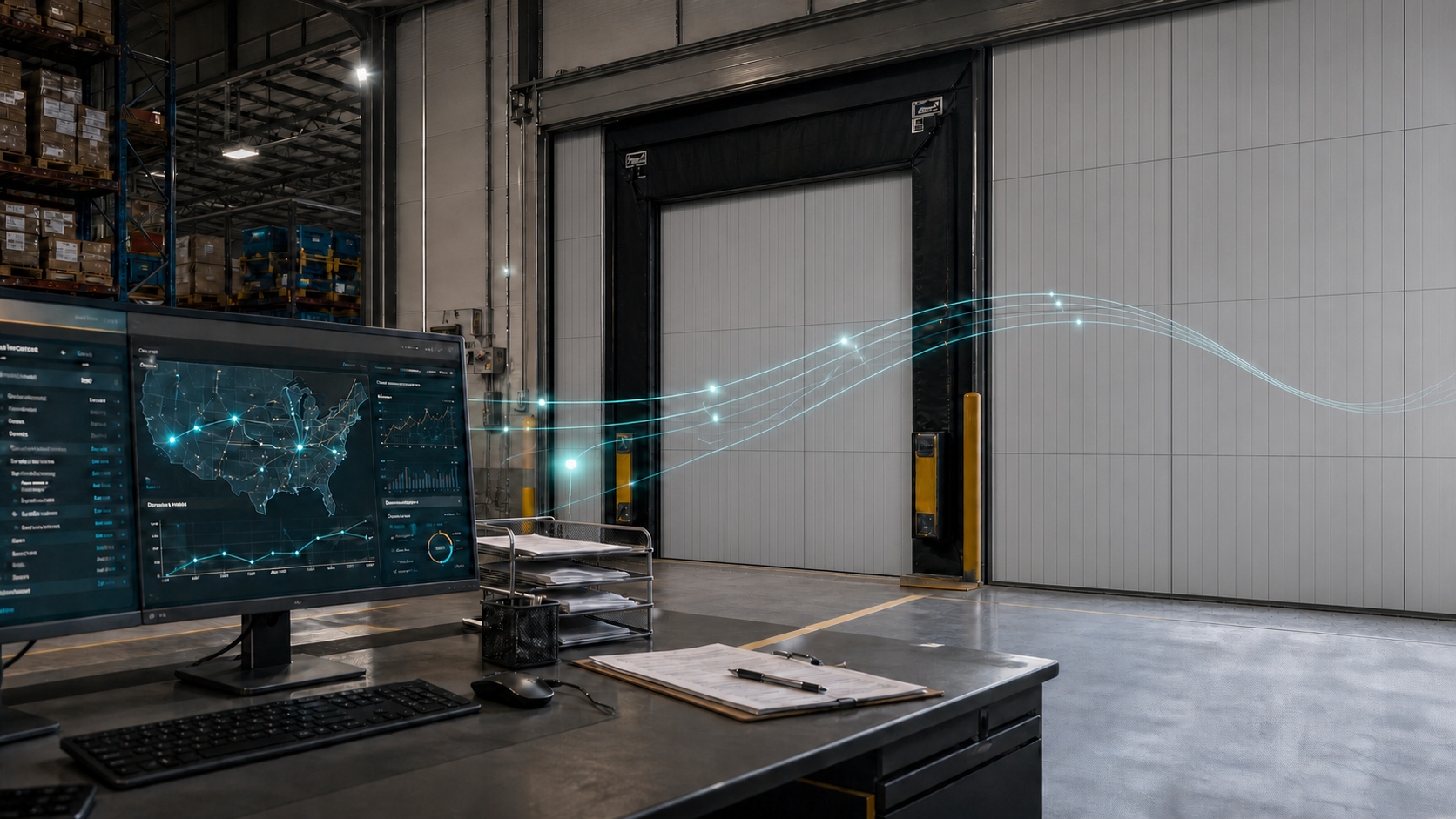
Data analysis should make freight performance easier to understand. Useful dashboards should help teams review KPIs such as on-time performance, accessorial patterns, lane cost, carrier performance, freight audit findings, and shipment volume.
Finance teams may care most about spend visibility, invoice accuracy, freight payment, and cost variance. Operations may care about status, exceptions, appointment risk, and provider performance. Leadership may care about trends, service, scalability, and supply chain management maturity.
An AI transportation management system should support each of those views without creating separate reporting silos.
How Lighthouse Fits The Category
Lighthouse is Tilt's shipper-facing platform built for visibility, security, analytics, automation, and sustainability across freight workflows. It is designed to help shippers centralize transportation work, reduce manual effort, and make more informed decisions from quote through delivery.
For teams evaluating an AI-powered TMS, Lighthouse represents a practical approach: use intelligence to improve freight workflows, but keep the experience grounded in real operational needs.
The Bottom Line For Shippers
The best AI transportation management system is not the one with the loudest AI claims. It is the one that helps your team run freight with better visibility, cleaner handoffs, stronger data, and more scalable workflows.
Evaluate features through the work your team performs every day. If the system improves speed, accuracy, visibility, and decision-making without removing control, it is worth a closer look.
FAQs
Q: What is an AI transportation management system?
A: It is a transportation management system that uses artificial intelligence, machine learning, predictive analytics, and automation to support freight planning, execution, visibility, and reporting.
Q: Which AI TMS features matter most for shippers?
A: Shippers should prioritize visibility, exception management, data quality, automation, analytics, integrations, security, user adoption, and practical human support.
Q: Should every shipper use AI in transportation management?
A: Not every team needs advanced AI immediately, but growing shippers often benefit from tools that reduce manual work, centralize freight data, and support better transportation decisions.
See your freight in a new light.
Lighthouse gives logistics teams live shipment visibility, carrier signals, and exception alerts, without the manual work.
Request Access