Bill of lading software helps shippers create a more consistent process for one of the most important freight documents in the shipment record. Its value comes from reducing manual data entry, reusing information captured during booking, and keeping the final BOL connected to the shipment it describes.
Document errors often begin upstream. A consignee address changes but only one system is updated. Weight is retyped incorrectly. An old template is reused. A shipment reference disappears between booking and pickup. The software can make the workflow more controlled, but the source data still has to be accurate.
For small freight teams, the best tool makes shipping documentation easier to create, review, and find without adding another isolated system.
Why Bill Of Lading Errors Happen
Most BOL problems come from handoffs. A shipper may quote in one place, book in another, copy details into a template, email the file, and save the final version elsewhere. Every re-entry creates another opportunity for mismatch.
The same shipment may touch an ERP, a warehouse management system (WMS), QuickBooks, inventory management software, carrier portals, or a TMS. If those systems do not share clean data, teams can end up with conflicting consignee information or shipment references. Order fulfillment can suffer when the transportation record and order record drift apart.
Digitization helps when it reduces those handoffs. It does not eliminate the need for review. A connected workflow should make the correct data easier to reuse and the correct version easier to identify.
Our guide to freight booking software explains how booking details can become the foundation for downstream shipment records instead of being retyped at every step.
What A Connected BOL Tool Should Do
A practical system should support BOL creation from structured data, save the document with the shipment, preserve an audit trail, and retrieve the right version later. Depending on the product, it may also support shipping labels, shipment tracking, timestamps, and electronic signatures.
The important distinction is workflow. A document generator can create a form. A connected TMS can use the same shipment data across quoting, booking, BOL creation, tracking, proof of delivery, invoices, and exceptions.
That model becomes more valuable as volume grows because the team spends less time reconciling records.
From Paper BOL To Electronic Bill Of Lading
A standards-based electronic bill of lading (eBOL) workflow can represent bill-of-lading data in a structured digital format. An eBOL can support cleaner handoffs because systems do not have to rely on a scanned image as the only source of truth.
The freight industry is actively standardizing eBOL exchange. For LTL documentation, the eBOL API standard gives systems a common framework for exchanging bill of lading data. For shippers, that makes eBOLs more useful because information can move more consistently between platforms.
Electronic bill of lading software can preserve timestamps and electronic signatures when appropriate. Legal requirements vary, so teams should work with qualified advisors rather than assuming every digital document is interchangeable.
How OCR Helps With Existing Shipping Documentation
Freight teams still receive scanned PDFs, photos, and paper forms. OCR, or optical character recognition, can extract text from those files so users do not have to key every field manually.
OCR can help associate an incoming BOL, proof of delivery, or invoice with an existing shipment and search older image-based records. But OCR is not a substitute for validation; poor images or unusual layouts can produce errors.
A strong workflow treats OCR as an assistive step: capture text, compare it with the shipment record, flag uncertainty, and keep human review for important fields.
The Shipment Data That Needs To Stay Accurate
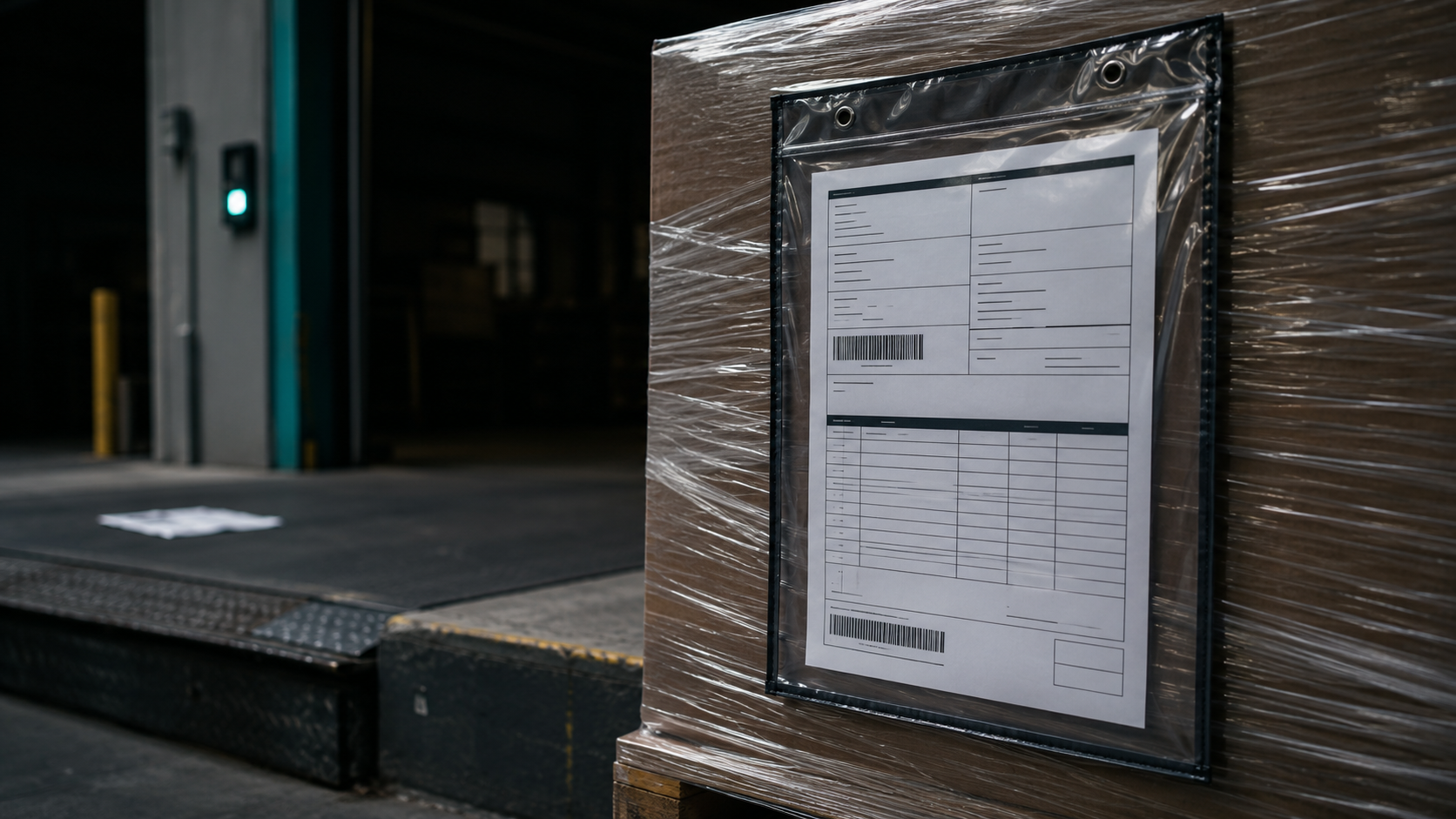
Common BOL data includes the shipper, consignee, origin, destination, references, commodity description, handling units, weight, dimensions, and service instructions.
From a legal terminology perspective, the Uniform Commercial Code defines a bill of lading as a document evidencing receipt of goods for shipment and includes it within the broader concept of a document of title. That is one reason teams should not treat the BOL as an informal packing note; it may connect to the contract of carriage and other legal rights.
This article is operational guidance, not legal advice. Confirm regulatory compliance and document requirements with qualified counsel or compliance professionals.
Connect Booking Data Directly To The BOL Workflow
The inefficient process is familiar: quote, book, retype, create the BOL, email it, and file it. A better process reuses the shipment record to generate or manage the eBOL and keep it with the shipment.
That is where a TMS or freight management platform can be more useful than a standalone document tool. If the consignee information changes before pickup, the team should know which record needs updating. If the shipment is later reviewed, users should be able to see which BOL version was associated with the move.
For LTL teams specifically, our LTL freight management guide explains why dimensions, class, accessorial charges, BOL details, and delivery requirements all need to stay aligned.
Document Management Should Continue After Pickup
The BOL is one piece of the freight record. A connected workflow can also organize rate confirmations, pickup records, photos, exception notes, proof of delivery, invoices, and claims documents.
For a shortage or damage claim, a shipper may need to reconstruct what was booked, what the eBOL said at pickup, what the consignee recorded at delivery, and which supporting records exist.
Our guide to freight claims management software shows why claims work becomes easier when the evidence is already tied to the shipment instead of scattered across inboxes.
Standalone BOL Tools vs. a Freight Management Platform
A standalone BOL tool can fit when the problem is specifically document creation. A broader freight platform may fit better when errors are a symptom of disconnected booking, tracking, invoicing, claims, and analytics.
Carriers, 3PLs, and freight forwarders may all exchange shipping documentation, but the shipper's priority is an accurate operational record across the parties involved. Some legacy workflows also reference VICS BOL conventions; verify the format your partners actually require.
A mature eBOL workflow may connect through APIs to a TMS, an ERP, a WMS, or inventory management software. NMFTA also maintains broader digitalization standards for electronic freight data exchange. Digitization becomes more than scanning when eBOL data can move with the shipment.
What To Look For In A BOL Workflow
Look for data reuse, consistent templates, search, version clarity, audit trail support, permissions, security, and connections to systems your team uses. Test OCR with imperfect documents, and confirm any electronic signatures fit your internal and legal requirements.
Also test retrieval. Can users find the correct eBOL later, connect it to proof of delivery and the final invoice, and distinguish a draft from the final document?
Final Thoughts
The software can reduce errors when it removes duplicate entry, improves version control, and keeps the BOL connected to accurate shipment data. The most useful systems treat the eBOL as part of a larger freight record.
Lighthouse is our shipper-facing platform for freight workflows, visibility, documents, analytics, and execution context. If your team is still creating, emailing, scanning, and filing BOLs manually, TILT can help you evaluate where a more cohesive document process can reduce unnecessary handoffs while keeping human review in the loop.
FAQs
Q: What is bill of lading software?
A: Bill of lading software helps shippers create, manage, store, and retrieve BOL information in a repeatable workflow. Some tools focus on document creation, while broader freight platforms connect the BOL to booking, tracking, delivery, and invoicing.
Q: Can a connected BOL workflow reduce shipping errors?
A: It can reduce duplicate entry, standardize document creation, and improve version control, but it cannot make inaccurate source data correct. Human review and clear data ownership still matter.
Q: What information belongs on a bill of lading?
A: Common information includes the shipper and consignee, origin and destination, shipment references, commodity details, handling units, weight, dimensions, and service instructions. Requirements vary by shipment and context.
Q: Can electronic BOL capabilities be part of a TMS?
A: They can be. Some products specialize in eBOL creation, while a broader TMS or freight management platform can connect eBOL data with booking, shipment tracking, proof of delivery, invoices, documents, and analytics.
See your freight in a new light.
Lighthouse gives logistics teams live shipment visibility, carrier signals, and exception alerts, without the manual work.
Request Access