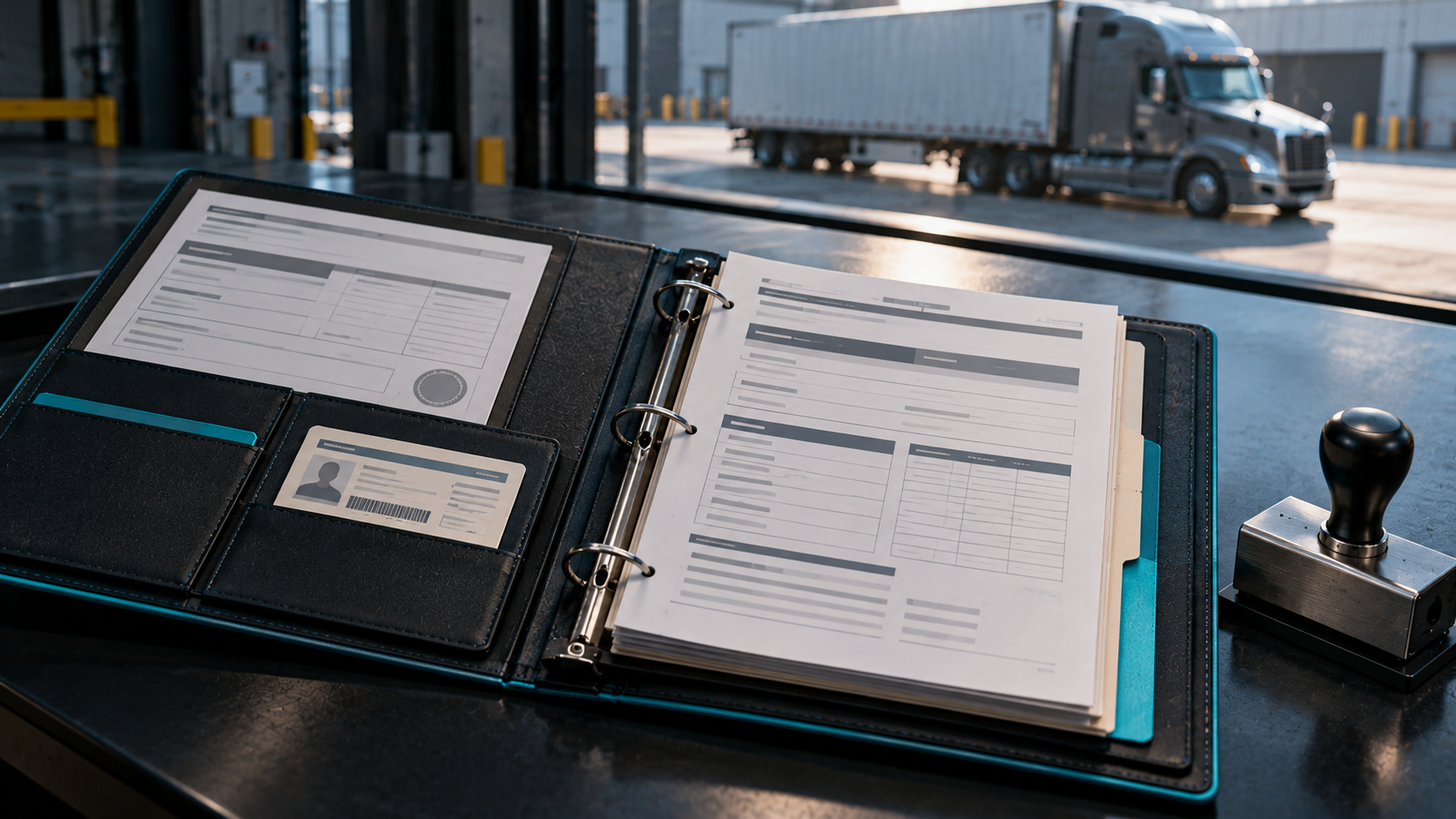
A shipment delivered in September can still generate a freight invoice in October. Additional accessorial charges, billing corrections, and carrier credits may arrive weeks after transportation is complete, creating challenges for logistics and finance teams.
Freight invoice management helps shippers organize these adjustments, verify transportation costs, and maintain accurate financial records.
Without a consistent process, businesses risk overlooking late freight bills, recording duplicate charges, or reporting incomplete freight spend.
For growing shippers, effective freight invoice processing connects the original shipment with every related charge, adjustment, and credit, even after month-end closes.
What Is Freight Invoice Management?
Freight invoice management is the process of receiving, reviewing, tracking, and reconciling transportation invoices throughout their lifecycle.
It connects shipment details, carrier invoices, contracted rates, payment records, and adjustments to provide a more accurate understanding of freight costs.
While freight invoice auditing focuses on verifying whether billed charges are correct, invoice management extends beyond the initial review.
A complete freight audit and payment process may include invoice validation, approval, payment processing, and reconciliation. However, freight audit and payment capabilities differ between providers.
For logistics teams, the priority is maintaining accurate shipment records and ensuring every charge can be traced to the transportation service performed.
Our freight audit software guide explains how connecting invoices with shipment documentation improves financial accuracy.
Why Freight Costs Change After Month-End
Transportation expenses frequently change after delivery because carriers and shippers do not always process information on the same schedule.
Delivered Shipments Without Invoices
A carrier may complete delivery before submitting its freight bill.
These delivered-but-unbilled shipments create gaps between operational records and financial reporting.
Finance teams may estimate expected transportation costs while waiting for confirmed invoices.
Supplemental Freight Bills
Additional charges may appear after the original freight invoice.
Common examples include detention, redelivery fees, fuel surcharges, and other accessorial charges that were not included in the initial billing.
Carrier Credits and Corrections
Carriers may issue credits to correct billing errors, duplicate invoices, incorrect rates, or previously approved overcharges.
These adjustments should remain connected to the original shipment rather than replacing earlier financial records.
Accurate freight invoice management preserves both the initial charge and subsequent correction.
How to Track Delivered-but-Unbilled Shipments
One of the most useful month-end practices is maintaining a list of completed shipments without corresponding carrier invoices.
Start by comparing delivery records with received freight bills.
Each unmatched shipment should include its carrier, delivery date, shipment reference, estimated transportation cost, and assigned follow-up owner.
Supporting documents such as bills of lading and proof of delivery help verify that the transportation service occurred.
A bill of lading (BOL) establishes shipment information, while proof of delivery confirms relevant delivery details.
Consistent data capture makes invoice matching easier and reduces reliance on disconnected spreadsheets.
The objective is to identify missing invoices before they become unresolved reporting discrepancies.
Connecting Late Charges to Original Shipments
Every supplemental invoice, correction, or credit should reference the shipment that generated it.
For example, an LTL carrier might submit a revised freight bill after identifying a classification discrepancy.
The transportation team should compare the new charge against the original quote, BOL, delivery documentation, and applicable contracted rates.
If the adjustment is valid, the shipment record should reflect the revised amount without deleting the original transaction.
If the charge is incorrect, the business should initiate dispute resolution with supporting evidence.
Our LTL freight cost control guide explains how classification changes and unexpected accessorial charges affect final freight expenses.
Maintaining clear audit trails helps teams investigate overpayments and prevent the same billing issue from recurring.
Preventing Duplicate Invoices and Overpayments
Duplicate invoices are a common risk when freight bills arrive through several channels.
A carrier might send the original invoice through electronic data interchange (EDI) and later email another copy.
Without reliable invoice validation, both records could enter the accounts payable workflow.
Freight invoice processing should check carrier identifiers, invoice numbers, shipment references, and previously approved charges.
This helps identify duplicate charges before they become duplicate payments.
When overpayments have already occurred, finance should document the recovery or credit process and preserve the connection to the original transaction.
Effective freight audit practices protect transportation spend while reducing unnecessary administrative work.
Managing Quoted, Billed, and Validated Freight Costs
A freight quote represents an expected transportation cost, while a carrier invoice records the amount billed.
Those figures may differ because of accessorial services, classification changes, or corrected shipment details.
Freight invoice management should distinguish quoted estimates from billed amounts and charges validated against shipment records and agreed rates. Track disputed amounts separately until they are resolved, and link credits to the charges they adjust. Record paid amounts separately so invoice approval is not confused with payment settlement.
For example, a shipment quoted at $500 may later receive a $75 detention charge. If the carrier subsequently issues a $25 credit, the final net billed amount becomes $550.
These hypothetical adjustments should remain visible individually.
Finance determines the appropriate accounting treatment, including accruals, cost allocation, and period-close decisions.
Logistics teams support that process by providing accurate documentation and explaining operational changes.
Clear records also help finance assign appropriate GL codes and understand how adjustments affect working capital.
How Logistics and Finance Should Coordinate
Effective freight invoice processing requires clear ownership across departments.
Transportation teams typically provide shipment details, carrier communications, and execution documentation.
Accounts payable manages financial approvals, payment cycles, and carrier payments through the appropriate financial systems.
Procurement may help verify contracted rates or resolve recurring pricing discrepancies.
A shared exception management process allows teams to identify missing invoices, disputed charges, and unresolved carrier credits without duplicating effort.
The freight cost management guide explains why recurring freight spend reviews are more useful when logistics and finance work from connected shipment information.
How a TMS Supports Freight Invoice Management
A transportation management system (TMS) can help organize the operational records needed for freight invoice auditing.
Shipment identifiers, quoted rates, carrier details, delivery milestones, and supporting documents provide context for reviewing freight bills.
When connected to accounting or freight audit and payment systems, a TMS may improve data sharing and reduce manual reconciliation.
However, a transportation management system does not automatically perform payment execution.
Our freight management software guide explains how centralized transportation workflows support more consistent freight operations.
Lighthouse, our shipper-facing platform, focuses on connected shipment information, visibility, and freight intelligence rather than acting as a dedicated payment processor.
Metrics That Reveal Invoice Management Problems
Regular reporting helps businesses identify weaknesses in freight invoice management.
Useful measures include invoice receipt delays, delivered-but-unbilled shipment counts, unresolved disputes, billing errors, and outstanding carrier credits.
Teams should also compare final transportation costs against quoted amounts to identify recurring overcharges.
Carrier performance reviews can consider billing accuracy alongside delivery reliability.
For broader market context, shippers can use the Bureau of Labor Statistics Producer Price Index to understand transportation-related price trends and compare changes in freight costs over time.
Since fuel is another major factor in shipping expenses, monitoring diesel price data from the Energy Information Administration can help explain fluctuations in transportation costs. Additionally, the Federal Highway Administration's freight resources provide insight into U.S. freight operations and the factors influencing transportation efficiency.
While these resources offer valuable industry context, accurate financial reporting and effective freight invoice management ultimately depend on a company's own shipment and invoice records.
Reconcile Late Bills and Credits
Before the next month-end close, identify delivered shipments without invoices and assign a follow-up owner to each one. Link supplemental bills and credits to their original shipments, and keep quoted, billed, validated, disputed, credited, and paid amounts distinguishable.
FAQ
Q: What is freight invoice management?
A: Freight invoice management involves receiving, reviewing, tracking, and reconciling freight bills, including late invoices, supplemental charges, and carrier credits.
Q: Why do freight invoices arrive after delivery?
A: Carriers may process invoices after delivery confirmation or submit additional charges once supporting documentation becomes available.
Q: What is a delivered-but-unbilled shipment?
A: It is a shipment that has been completed but does not yet have a corresponding carrier invoice. These shipments require tracking to maintain accurate freight cost records.
Q: How can shippers prevent duplicate freight payments?
A: Consistent invoice matching, shipment references, and validation procedures can help identify duplicate invoices before payment approval.
Q: Can a TMS improve freight invoice management?
A: Yes. A TMS can provide connected shipment information that supports invoice review and reconciliation. Actual payment and accounting functions depend on the integrated systems.
Related Resources:
See your freight in a new light.
Lighthouse gives logistics teams live shipment visibility, carrier signals, and exception alerts, without the manual work.
Request Access